TMS for FMCG: Route Optimization & Transportation Management
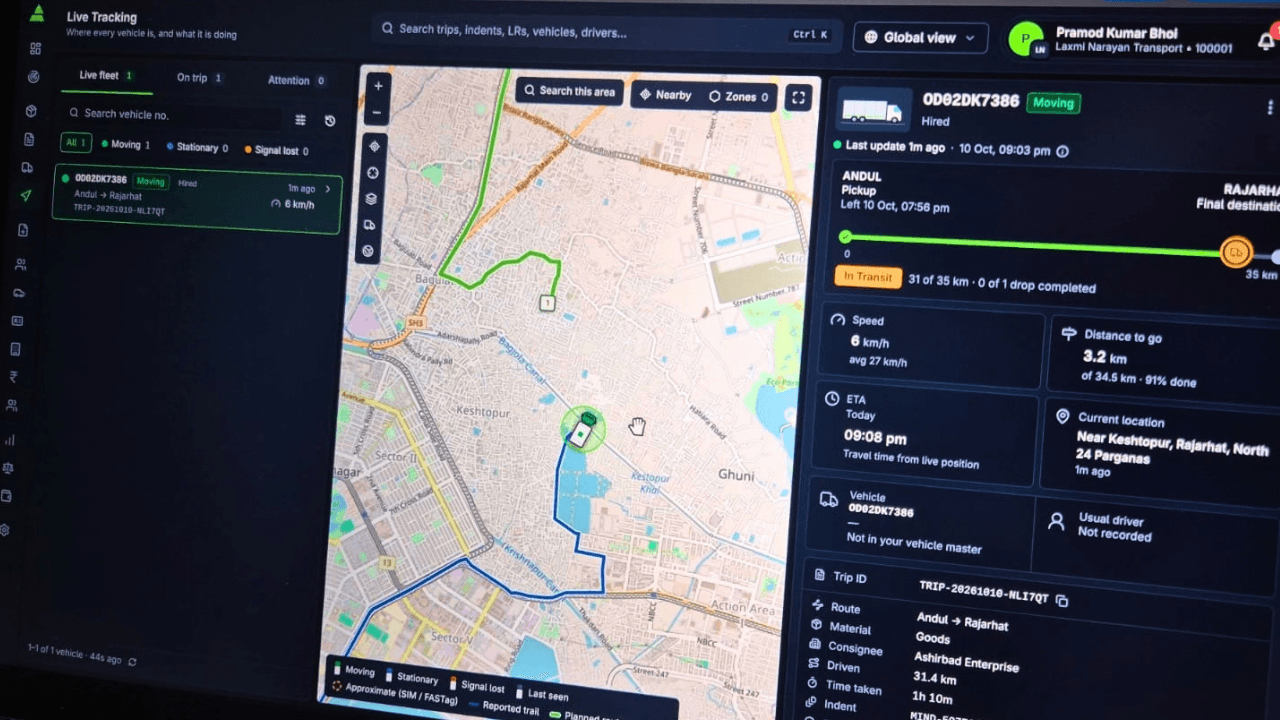
Discover how a modern Transportation Management System (TMS) helps businesses automate order planning, improve vehicle utilization, optimize delivery routes, manage freight procurement, and gain end-to-end transportation visibility.
Transportation is one of the most complex operational cost areas for FMCG, e-commerce, manufacturing, steel, mining, and oil and gas businesses. High order volumes, tight delivery schedules, multiple delivery locations, fluctuating freight rates, and limited vehicle availability make transportation planning difficult to manage manually.
A traditional approach often depends on spreadsheets, manual order clubbing, phone calls, and separate tracking and invoicing systems. These disconnected processes can lead to underutilised vehicles, missed orders, delayed dispatches, higher freight costs, and reduced OTIF performance.
A modern TMS addresses these challenges by connecting transportation planning, route optimisation, vehicle procurement, shipment tracking, and freight financial management on one platform.
Deltreq TMS brings these capabilities together with an integrated route-planning engine and network optimisation engine.
What Is a Transportation Management System (TMS)?
A Transportation Management System is software that helps businesses plan, execute, track, and analyze the movement of goods from warehouses, factories, and distribution centers to their destinations.
- Order consolidation and dispatch planning
- Route planning and vehicle allocation
- Freight procurement, transporter selection, and indent management
- Shipment tracking and delivery alerts
- Electronic proof of delivery (ePOD)
- Freight invoicing, payment workflows, and claim settlement
- Transporter performance and cost analytics
Why Manual Transportation Planning Increases Logistics Costs?
1. Poor vehicle utilization
Vehicles may leave warehouses with unused capacity while other orders require additional trips. This increases freight cost.
2. Missed orders during dispatch planning
When order clubbing and dispatch schedules are maintained manually, orders can be overlooked or assigned to an unsuitable delivery plan.
3. Delayed vehicle placement
Late planning can delay transporter indenting and vehicle placement, reducing warehouse readiness and putting delivery commitments at risk.
4. Inefficient delivery routes
Planning multiple drops without considering route distance, delivery sequence, vehicle capacity, and delivery constraints can increase kilometres travelled and operating costs.
5. Limited transportation visibility
When planning, tracking, transporter communication, and invoicing operate separately, teams struggle to identify delays and understand the financial impact of each trip.
How Deltreq TMS Connects Route Planning with Network Optimization.
Transportation network optimisation takes a broader view of how orders, warehouses, delivery locations, vehicle requirements, and transportation flows should work together across a distribution network.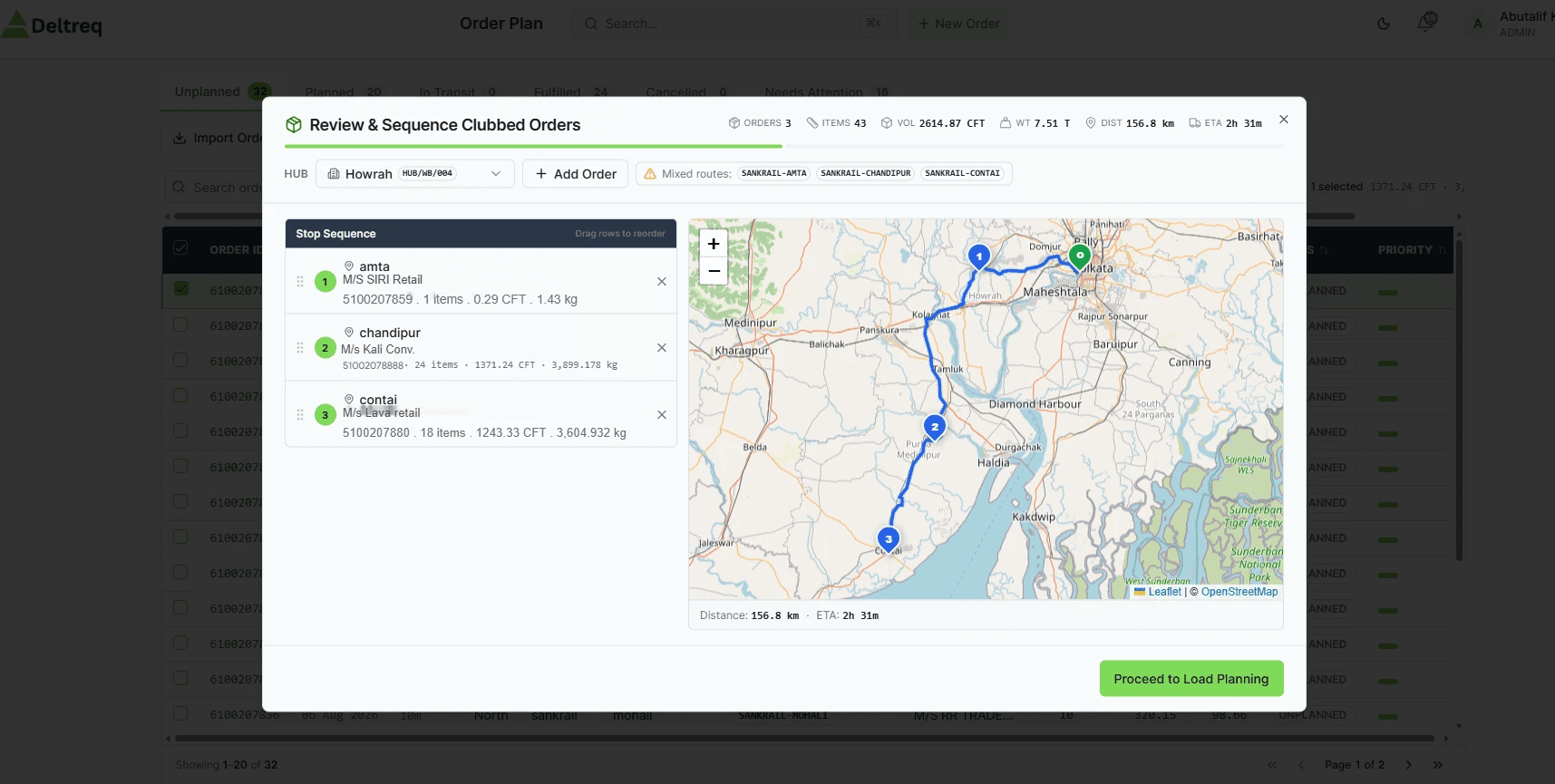
Deltreq TMS combines its integrated route-planning capabilities with a network optimization approach to help businesses organize dispatch plans around order requirements, vehicle utilization, route selection, and transportation efficiency.
The intended operational workflow is straightforward:
- Order consolidation: Collect eligible orders received within the defined planning cutoff.
- Planning and optimization: Evaluate order combinations, delivery locations, vehicle requirements, and route options.
- Vehicle allocation: Prepare a suitable vehicle plan based on capacity and business rules.
- Transporter indenting: Initiate vehicle procurement and placement against the planned requirement.
- Dispatch execution: Enable teams to review, confirm, and execute plans.
- Tracking and alerts: Monitor shipment movement and identify operational exceptions.
- Financial closure: Connect delivery documentation, freight invoicing, payment workflows, and claims.
- Performance analysis: Review transportation costs, transporter performance, delivery execution, and fleet utilization.
By connecting these activities, Deltreq aims to help transportation teams reduce manual coordination and improve control over the complete freight lifecycle.
Why Vehicle Utilization Matters More Than Ever?
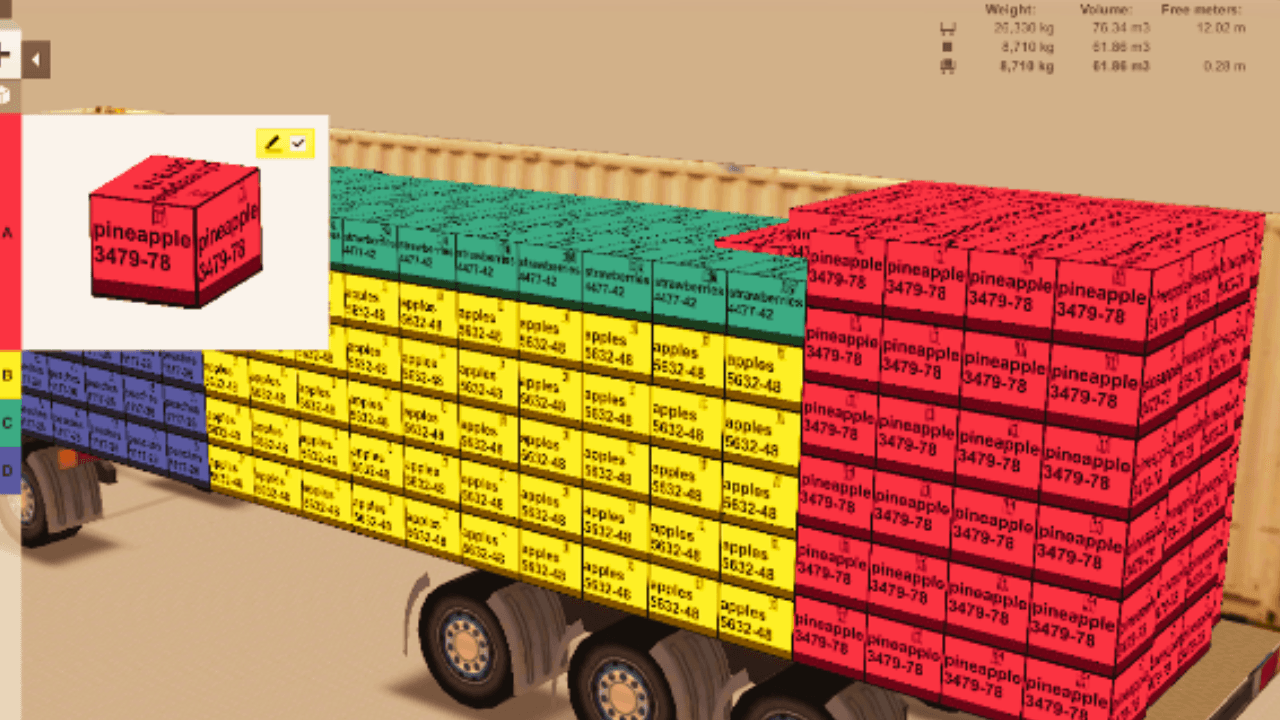
Vehicle utilization directly influences transportation economics.
When a vehicle carries less cargo than its practical capacity, the trip's fixed and variable costs are distributed across fewer units of cargo. This can increase the cost per kilogram, box, cubic foot, or delivered order.
Beyond Tracking: A Complete Transportation Management Platform
Shipment tracking tells a business where a vehicle is. A full-fledged TMS should also help explain whether the shipment is following its plan, whether a delivery commitment is at risk, what action is required, and how the trip will be financially closed.
Deltreq TMS brings transportation execution and management capabilities together, including:
Shipment tracking: Support shipment visibility through the platform's tracking capabilities, including GPS- and SIM-based tracking options and mobile applications for applicable delivery operations.
Transport procurement and indent management: Coordinate vehicle requirements, transporter allocation, and freight procurement workflows.
Operational alerts: Help teams monitor exceptions such as estimated time of arrival changes, route deviations, detention, and hub-wise dwell time, subject to configured capabilities and data availability.
Driver and rider applications: Support driver or rider workflows, including last-mile and hyperlocal delivery operations.
Electronic proof of delivery: Connect delivery documentation with subsequent billing and claim processes.
Freight invoicing and payment workflows: Link trip execution with freight cost verification, invoice management, settlement, and payment processing.
Transport analytics: Provide operational and financial visibility through dashboards and reports covering trips, freight cost, transporter performance, and execution status.
The benefit of integration is that planning data and execution data can support the next operational decision instead of remaining isolated across multiple systems.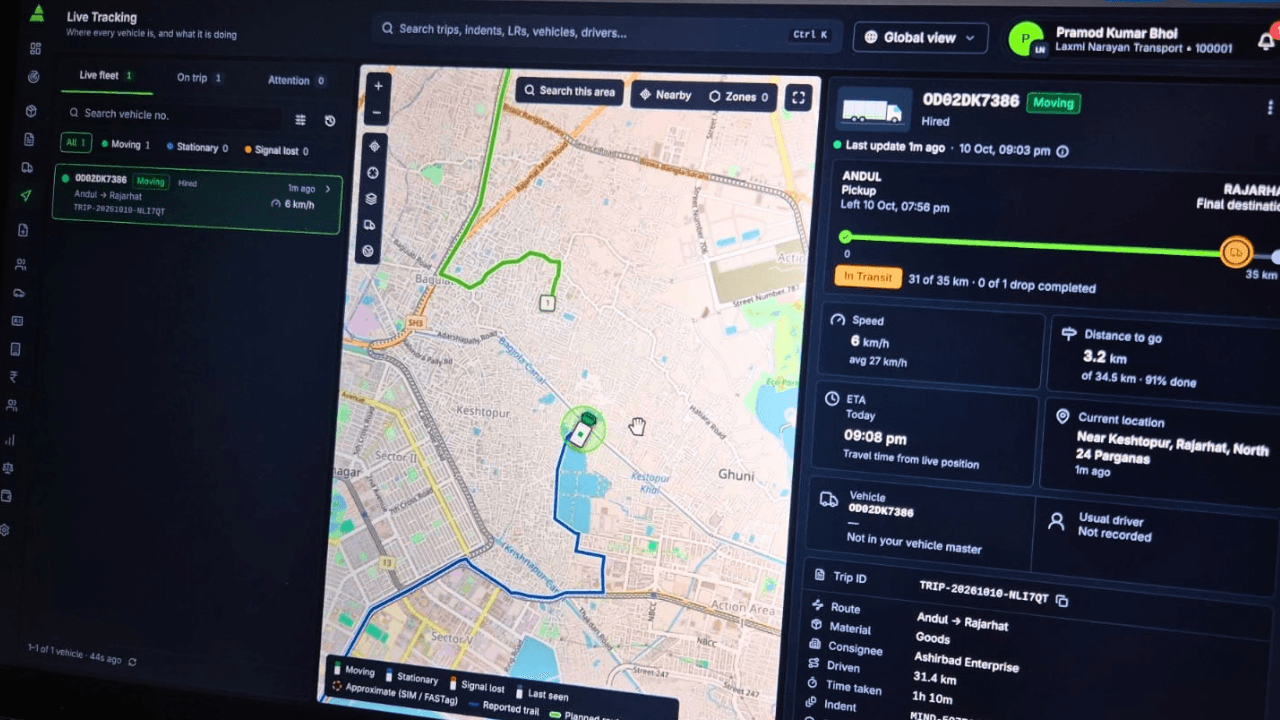
How to Choose the Right TMS for Your Business ?
When comparing TMS software, businesses should evaluate the complete transportation lifecycle rather than choosing a platform based only on its tracking interface.
Ask these questions before selecting a TMS:
- Does it include route planning and order consolidation?
- Can it recommend vehicles based on capacity and business rules?
- Does it support network-level transportation planning?
- Can it manage transporter procurement, bidding, and indent workflows?
- Are tracking and operational alerts integrated with dispatch planning?
- Can proof of delivery, freight invoices, claims, and settlements be connected?
- Does it provide trip-wise costs and transporter performance reports?
- Can the software support the operational requirements of your industry?
- Can planners, transporters, drivers, and finance teams work within connected workflows?
The right solution should reduce fragmented processes, improve decision-making, and provide measurable visibility into transportation performance.
Conclusion: Move from Transportation Coordination to Transportation Optimization
Transportation efficiency depends on making the right decisions before dispatch and maintaining control throughout the trip and financial settlement.
A modern TMS connects order planning, route optimization, vehicle utilization, freight procurement, tracking, proof of delivery, invoicing, and analytics in a coordinated workflow.
For businesses managing complex transportation operations across FMCG, e-commerce, manufacturing, steel and mining, and oil and gas, Deltreq TMS provides an integrated approach to planning and managing the freight lifecycle.
Looking to improve transportation planning and gain better control over freight operations?
Explore Deltreq TMS to understand how integrated route planning, network optimization, transporter management, and shipment visibility can support your business.
Deltreq TMS From order planning to delivery and freight settlement, one connected transportation management platform.