When Delays and Urgency Enter the Picture, Logistics Costs Begin to Rise
Logistics costs rarely jump overnight. They creep up when orders are planned late, vehicles are not available, shipments sit at hubs, and teams react to problems instead of preventing them. Then urgency arrives, and every fix gets more expensive: premium vehicles, express handling, and still no guarantee of on-time delivery. Last mile is where this hurts most. Commonly cited industry estimates put it at roughly 41–53% of total shipping or supply chain cost [1] [5], and failed or repeated deliveries can cost several times the original attempt [1].
What urgency does to cost and SLA
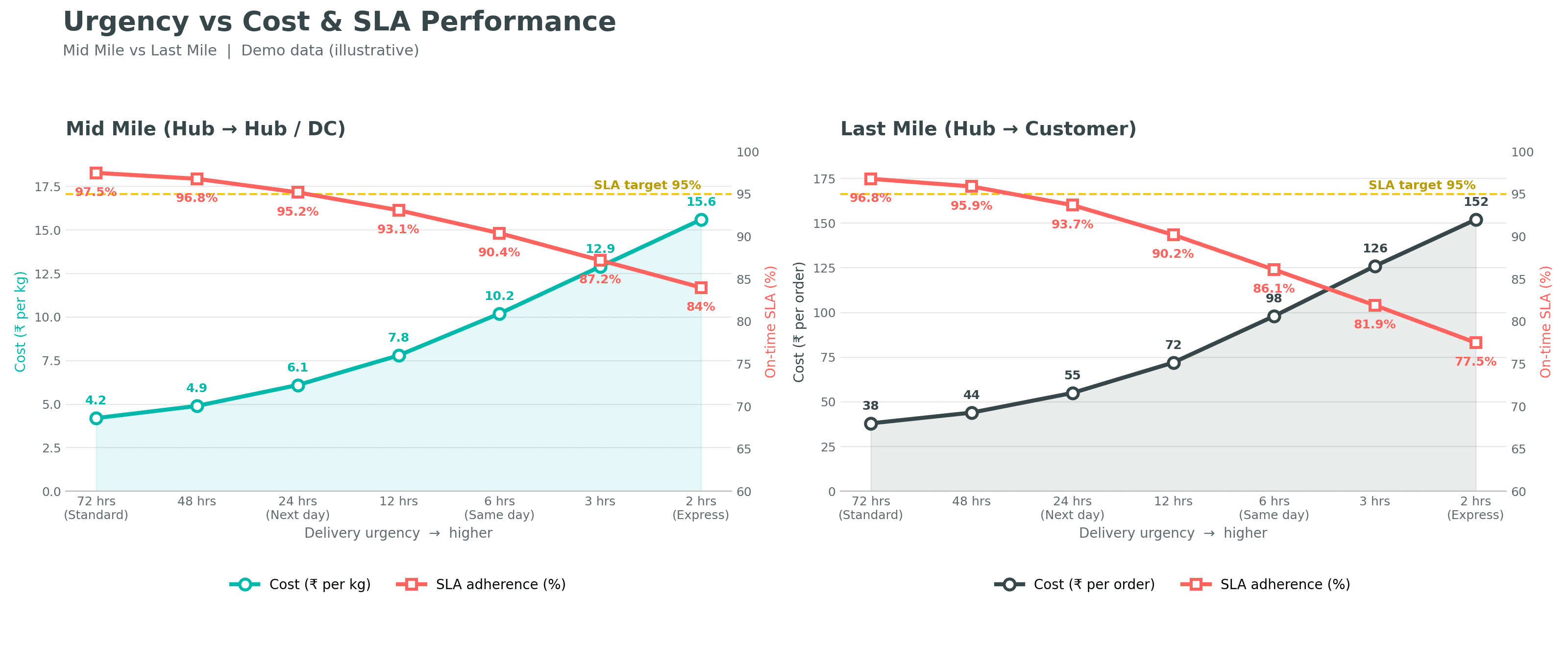
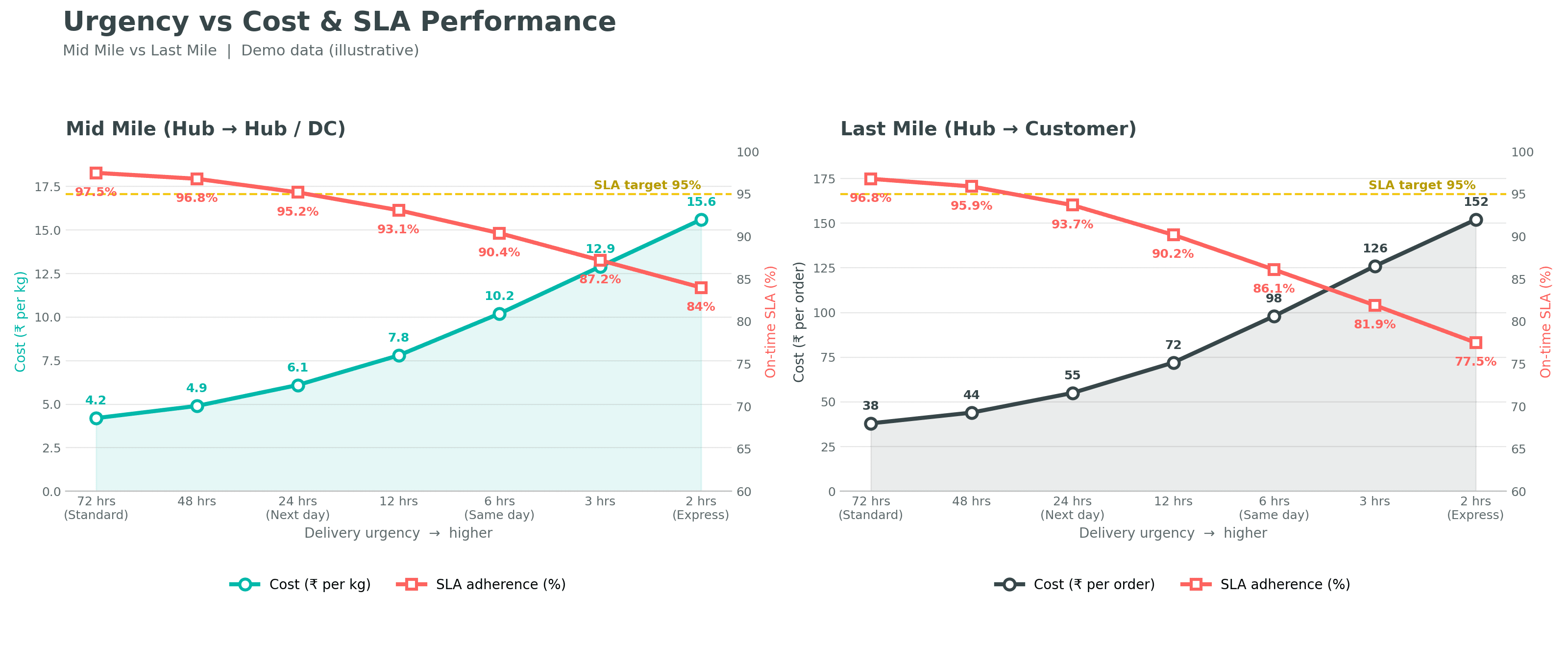 Figure 1: Urgency vs cost and SLA adherence, mid mile and last mile. Illustrative demo data
The pattern is the same in both legs: as the delivery window shrinks from 72 hours to 2 hours, cost per unit climbs steeply while on-time performance falls below the 95% target. In the demo data, last-mile cost per order rises about four times and SLA drops close to 20 points. Urgency is expensive, and it is also less reliable.
Where the extra cost comes from?
• Late planning. Delayed order planning delays vehicle allocation, loading and dispatch, which pushes deliveries past their commitments.
• Spot vehicle hiring. Road carries about 42% of India's logistics cost [2], so last-minute freight buying has a direct impact on margins.
• Dwell time. A vehicle tracked on the road can still be late if it waits at a warehouse, yard or hub.
• Manual coordination. Phone calls and spreadsheets hide problems until the deadline has already passed.
India's overall logistics cost is now officially estimated at 7.97% of GDP [3] [4], which means individual operators now have more to gain from tighter day-to-day execution than from waiting for the national average to improve.
How Deltreq TMS Control Tower helps?
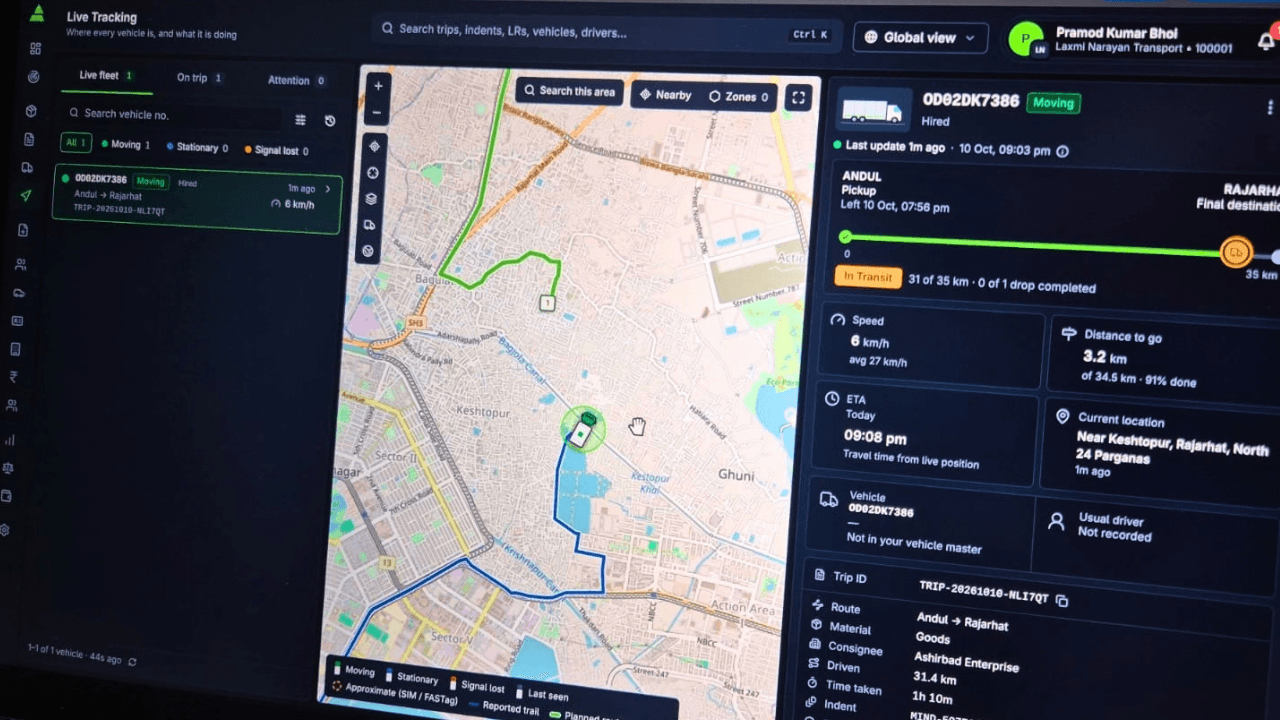
Deltreq TMS brings planning, transporter procurement, execution, real-time visibility and financial settlement onto one platform, so delays are caught while shipments are still in transit.
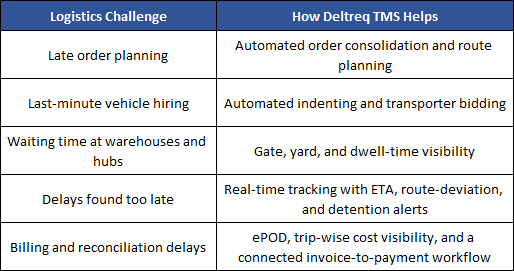
Control-tower alerts for ETA risk, route deviation, detention and hub-wise dwell time let teams act before the commitment is missed. The same connected data supports invoice verification and payment, so operations and finance work from one version of the trip.
Manage by visibility, not urgency
For FMCG, e-commerce, steel and mining, and oil and gas businesses, the goal is not just to know where a vehicle is. It is to know whether the order is planned, the vehicle is placed, the shipment is at risk, and what action protects the delivery commitment.
Deltreq TMS: from algorithm-based planning to end-to-end logistics control.
References
[1] SAN, “Your ‘instant’ delivery has a massive hidden cost” (last-mile share of 41–53% of cost; failed deliveries). san.com
[2] Business Standard, “Confidence in India's logistics cost: The story of economic transition,” Nov 2025. businessstandard.com
[3] NCAER and DPIIT, “Assessment of Logistics Cost in India,” Sept 2025. ncaer.org
[4] PIB, “Supercharging India's Logistics,” 27 Nov 2025. pib.gov.in
[5] Logistics Insider, “Making sense of the ever so expensive Last Mile.” logisticsinsider.in