Best Dynamic Route Planning TMS in India | Deltreq vs Locus, OptimoRoute, Blue Yonder
Why Route Planning Decides Logistics Profit in India
Indian logistics is one of the most complex networks in the world. Thousands of SKUs, multiple warehouses, mixed vehicle sizes, tight delivery windows, state wise rates and rising fuel cost all hit the same trip sheet. For FMCG distributors, e commerce sellers and quick commerce operators, a poorly planned route means.
• Half-empty vehicles and higher cost per kg or per case
• Late deliveries and missed slots
• Manual planning that takes hours and still misses savings
• No clear visibility from order to invoice to proof of delivery
This is why more companies are moving from spreadsheets and basic route tools to a full dynamic, automated route planning engine inside a Transport Management System (TMS).
What Is Dynamic or Auto Route Planning?
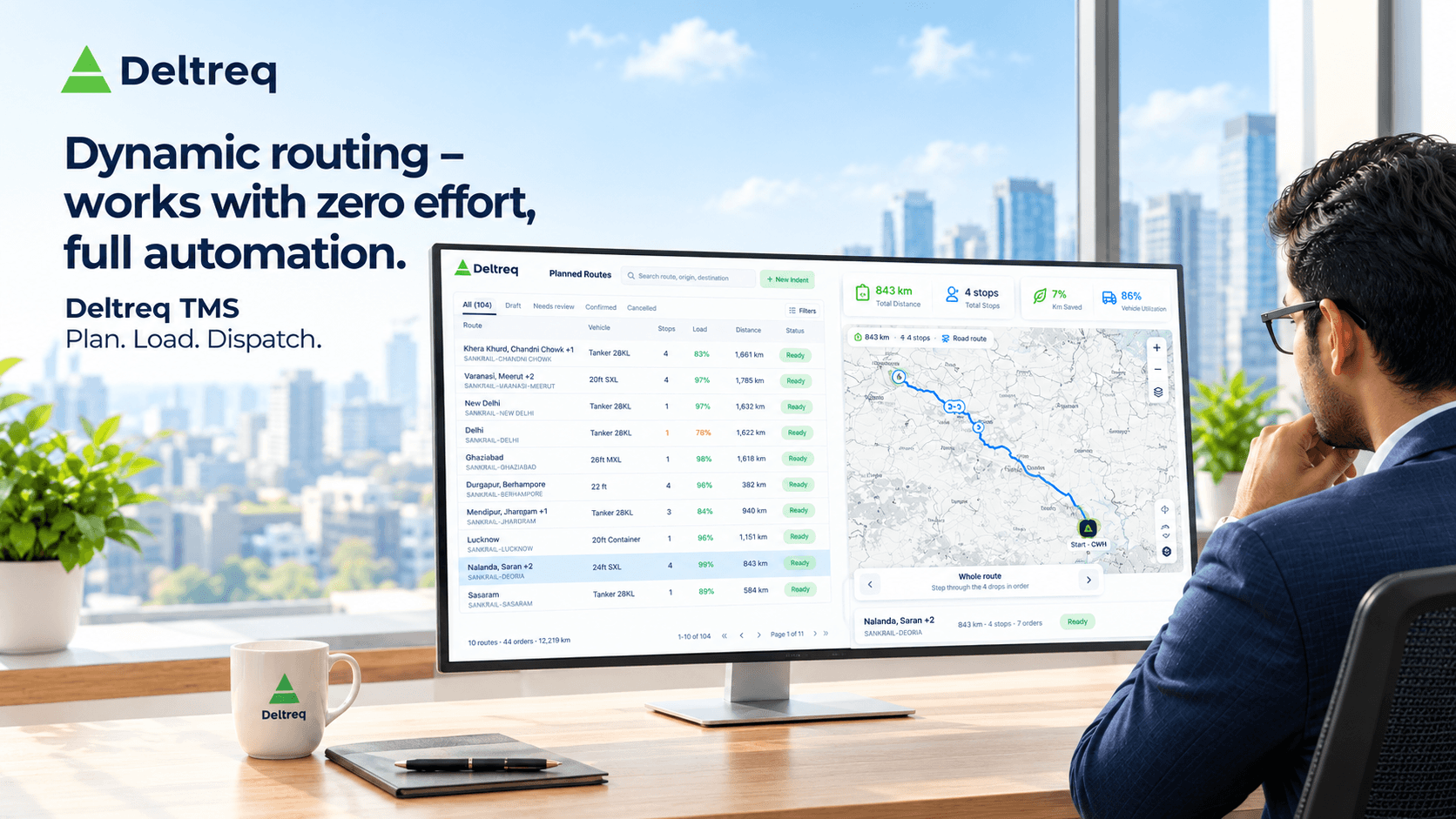
Dynamic (auto) route planning means the software builds and rebuilds routes by itself, as orders arrive, using live constraints: order volume and weight, vehicle capacity, delivery windows, warehouse location, distance, and cost. Instead of a planner manually dragging orders onto trucks, the engine proposes the lowest-cost plan in minutes and re-plans when something changes.
A good engine must handle:
• Load consolidation across orders, customers and routes
• Multi-warehouse planning so each order ships from the right node
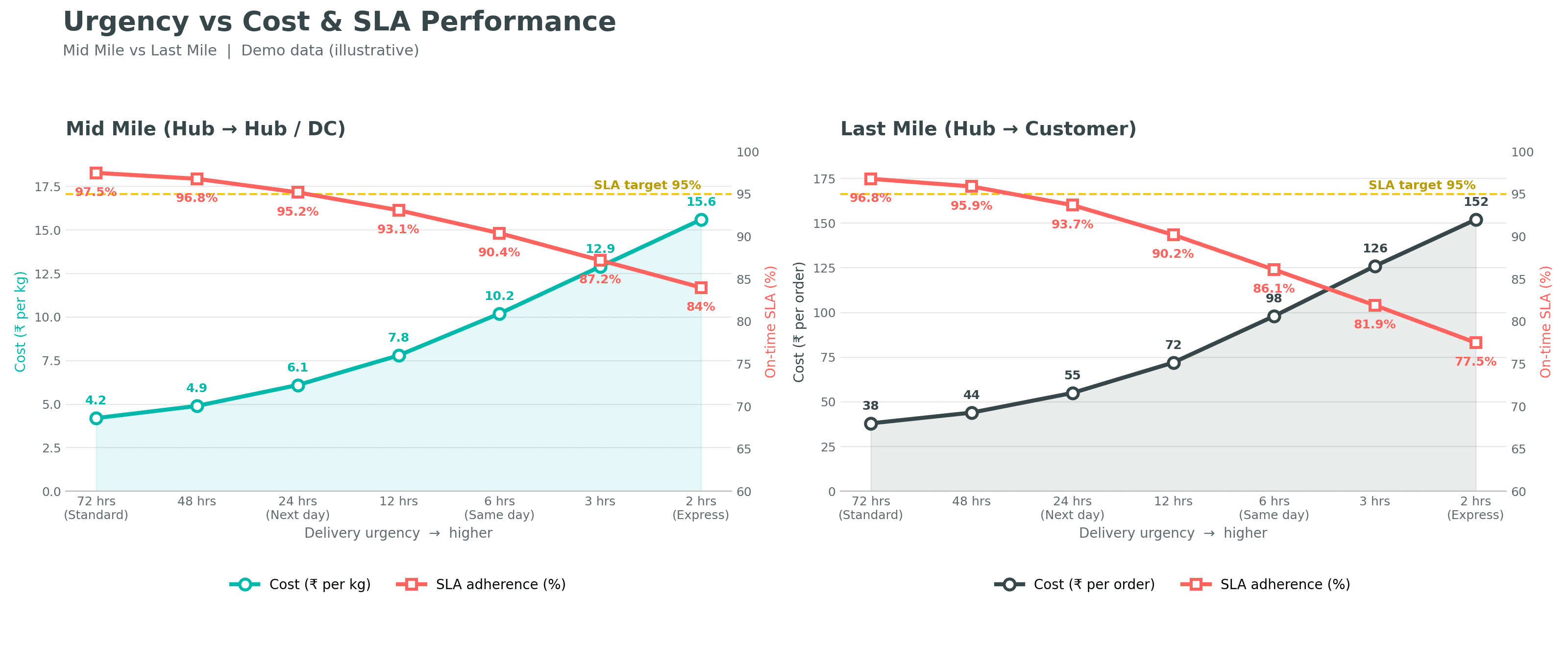
• Mid-mile and last-mile in one workflow
• Cost and SLA trade-offs, not just shortest distance
How Deltreq Is Different: More Than Connecting the Dots
Most route tools do one thing: they connect delivery points on a map in a sensible sequence. Deltreq's route planning engine starts earlier and goes further.
1. Intelligent planning after the order is received
The moment an order lands, the Deltreq engine looks for load consolidation opportunities and then finds the best route. It does not just sequence stops. It decides which orders should travel together, on which vehicle, from which warehouse, to reduce total cost per delivery.
2. Multi-modal planning: national, international and hyperlocal
Deltreq supports multi-modal transportation planning. Whether the shipment is a national line-haul, an international movement or a hyperlocal quick commerce drop, the same platform plans it. Teams no longer need separate tools for primary distribution, secondary distribution and dark-store delivery.
3. Warehouse-wise route planning for minimum cost
Routes are planned warehouse by warehouse. Each order is mapped to the optimal dispatch point, and routes are built from that node, keeping empty running and transport cost to a minimum. This is especially valuable for FMCG companies running a central warehouse plus regional depots, and for 2PL/3PL networks.
4. A full end-to-end TMS, not just a routing add-on
Deltreq combines its own planning engine with:
• Procurement of transport (vendor and rate management)
• Freight invoicing and reconciliation
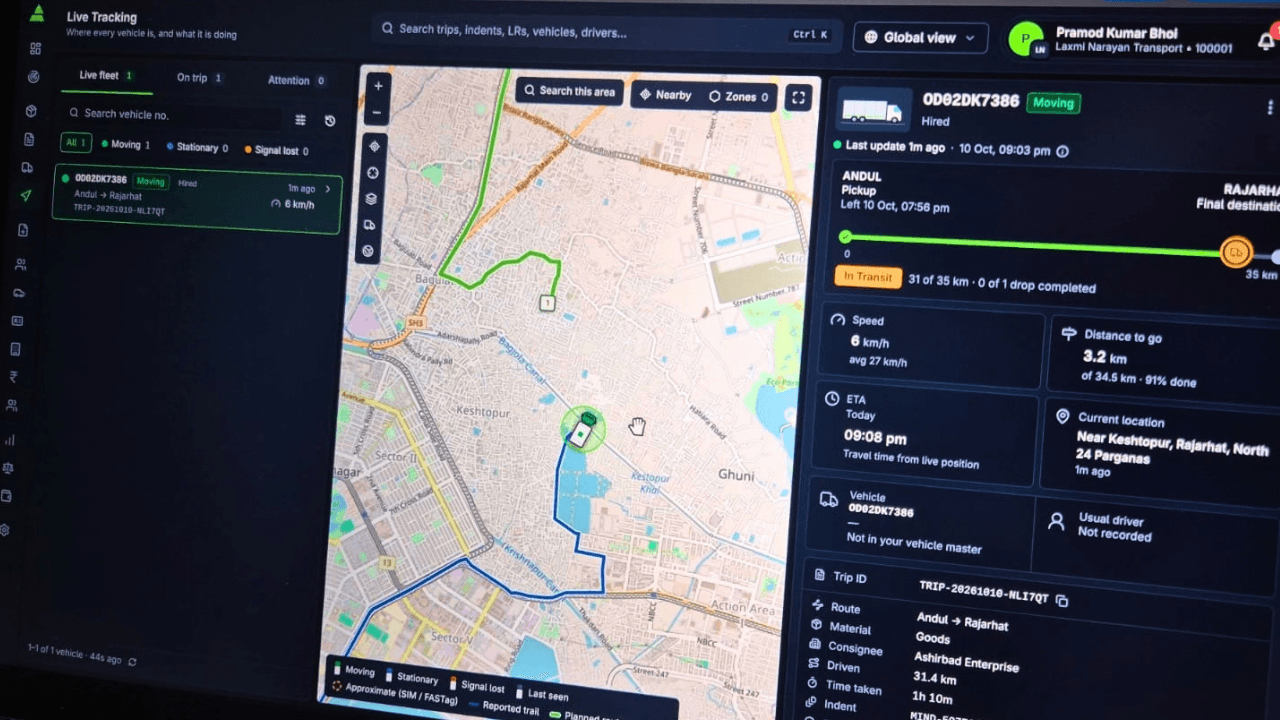
• Live tracking and proof of delivery
• Analytics and MIS dashboards
This closes the loop from order to plan to dispatch to tracking to invoice to analytics on a single platform.
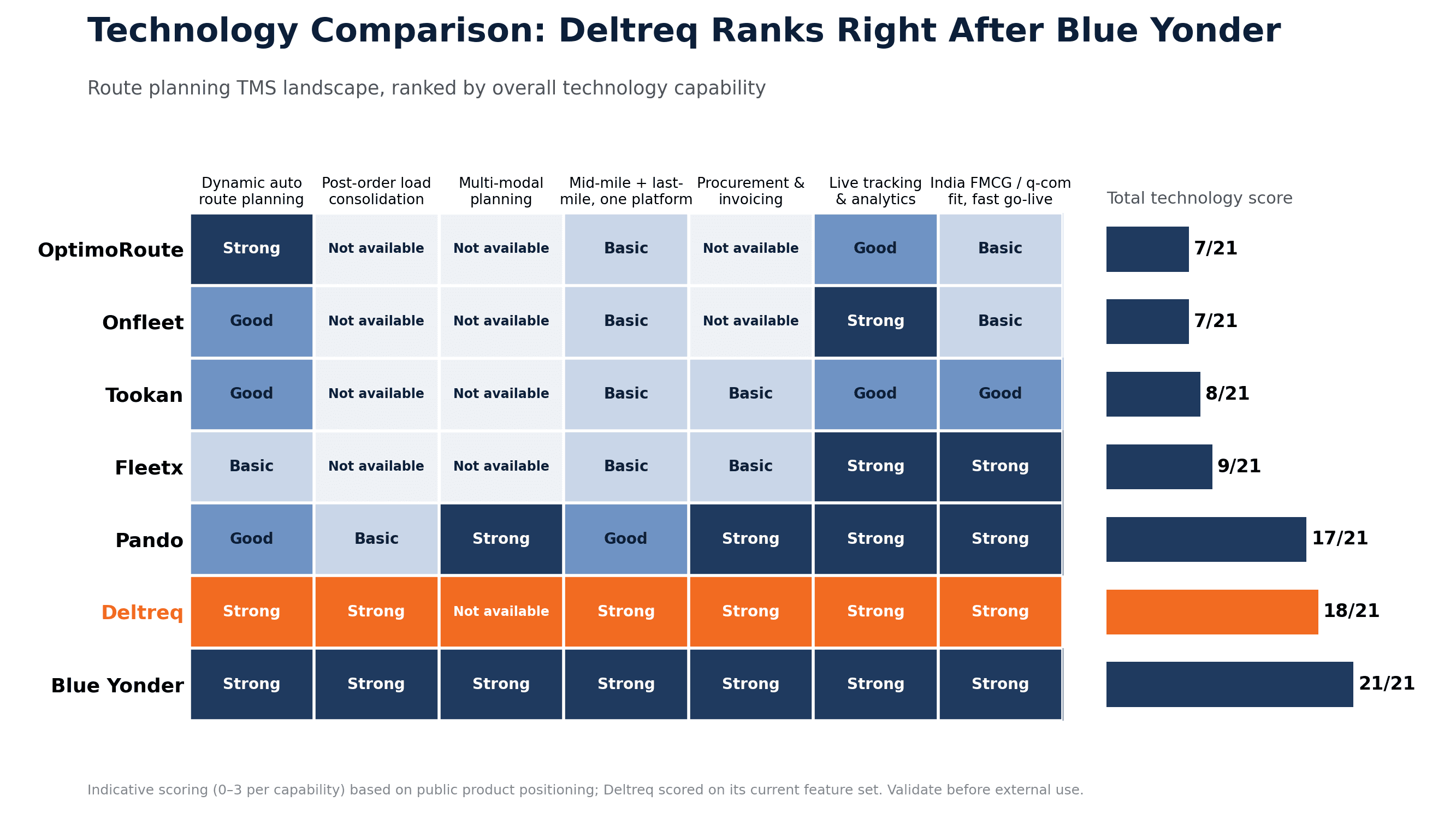
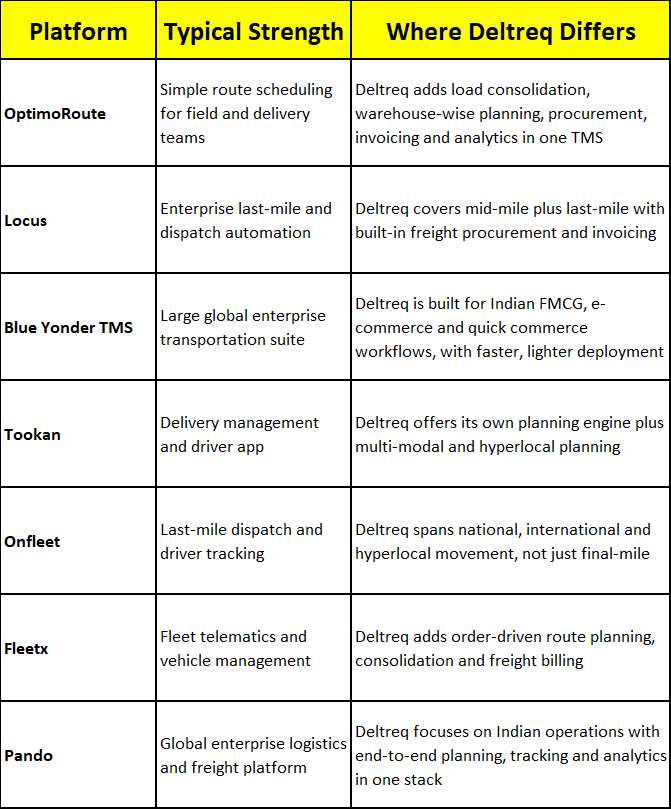
Deltreq vs Other Route Planning and TMS Tools in India
The market has strong players. Here is how Deltreq's approach compares at a positioning level. (Review each competitor's current feature set before publishing, as products change.)
Deltreq for FMCG, E-Commerce and Quick Commerce
FMCG
Plan primary and secondary distribution from central and regional warehouses. Consolidate loads across distributors, cut cost per case, and reconcile freight invoices against planned rates.
E-Commerce
Handle high order volumes with automated batching, slot-based delivery and mid-mile hub-to-hub planning that feeds cleanly into last-mile routes.
Quick Commerce
Support hyperlocal dark-store delivery with fast re-planning, so riders and small vehicles are used efficiently even as orders arrive continuously.
Key Benefits You Can Expect
• Lower transport cost per delivery through consolidation and warehouse-wise planning
• Less planning time, since routes are generated automatically
• Better on-time delivery with live tracking and re-planning
• Cleaner freight billing with built-in invoicing and reconciliation
• Data-driven decisions through end-to-end analytics
How to Choose the Best Route Planning TMS for Your Business
Ask these questions before you buy:
1. Does the engine plan after order receipt and consolidate loads automatically?
2. Can it plan by warehouse and handle multiple dispatch nodes?
3. Does it cover mid-mile and last-mile in one platform?
4. Are procurement, invoicing, tracking and analytics included, or sold separately?
5. Is it built for Indian rate structures, states and delivery patterns?
If you answer yes to all five, you are looking at a true TMS, and that is where Deltreq is built to lead.